 By
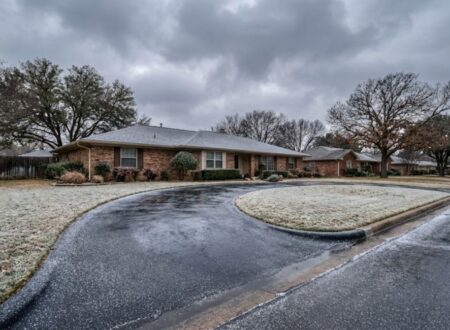
By Winter is often the most difficult season for pavement. The constant drop, rise, freeze, and unfreeze of temperatures will lead to rapid damage of the pavement. It will show itself in the form of cracks, potholes, and crumbly edges, appearing apparently out of nowhere. The longer you wait to address these problems, the more difficult and costly it will be to repair the damage.
To help with your pavement problems, here are some of the best tips for damage repair and prevention, including spotting damage early, DIY repair methods, and knowing when to call in the experts.
How Winter Weather Damages Asphalt
Asphalt may seem strong and durable, but each winter takes these surfaces across the country deeper into damage. Winter damage occurs for two main reasons.
Freeze and Thaw Cycles
A frost weathering cycle occurs when there is water on the surface of the asphalt. It freezes overnight, and during the day, the temperature rises, and the water melts.
During the cycle, the following damage can occur:
- Water enters tiny cracks.
- At night, the water freezes into ice, expands, and pushes the asphalt cracks open even wider.
- The next day, the ice melts, and the deeper the ice cracks, the more space/missing asphalt can be seen.
- Water can build up air pockets in the cracks.
- The following night, the process continues.
The alternating nighttime freezing and daytime thawing can complete this cycle in as little as 4 days. During this time, a small asphalt crack can double or triple in size. The more frequently this occurs, the more damage takes place, and the worse the asphalt surface becomes.
Weakening of the Surface and Infiltration of Water
As the ice or snow melts, that water seeps into the pavement. If drainage is poor, water stays contained below the surface. This weakens the base structure, causing the asphalt to soften and lose its ability to bear any weight. Quickly after vehicles drive over, depressions and potholes appear.
Identifying Freeze-Thaw Damage Quickly
Identifying the damage from winter freeze-thaw is an important first step for effective moderation of the damage. This is where quick damage assessments come in. The morning after a cold night is a great time to diagnose potential issues with the asphalt and look for the following signs:
1. Cracks Expanding Overnight
If you see a crack in the asphalt from the previous week that was small, but now is much larger, that is most certainly freeze-thaw damage. You may notice that the edges of the crack look like they are lifted or jagged.
2. Emergence of Potholes
It’s important to look for potholes that may emerge seemingly overnight, as they can retain water that leads to more damage. While the asphalt may look intact to the users the day before, the surface layer is more fragile than the underlying asphalt layer. Freeze-thaw cycles can push the surface layer and make several potholes appear.
3. Soft and Worn Edges
Over time, the edges of pavements can get worn. This can get even worse during the winter, as snow and freeze-thaw cycles can make the edges of the asphalt crumble a lot easier than intact areas. After the snow melts, look for edges that look worn down. If they seem soft or immediately crumble or break apart, the moisture levels lower than the asphalt are most likely severe.
4. Pooling Water
If water is sitting stagnant or gets removed in between freeze cycles, that is a major problem. Stagnant water can make roads marked with potholes even more dangerous. If you see pooling water that contains the same volume after every freeze-thaw cycle, underlying drainage issues are present. The asphalt will continue to sustain damage in the snow.
Winter Repair That Can Be Done As Emergency Fixes Yourself
Repairing certain winter damage can wait until summer. If you’re looking for a temporary fix to keep an issue from getting worse for winter, these DIY options can work until warmer weather and a permanent fix are feasible.
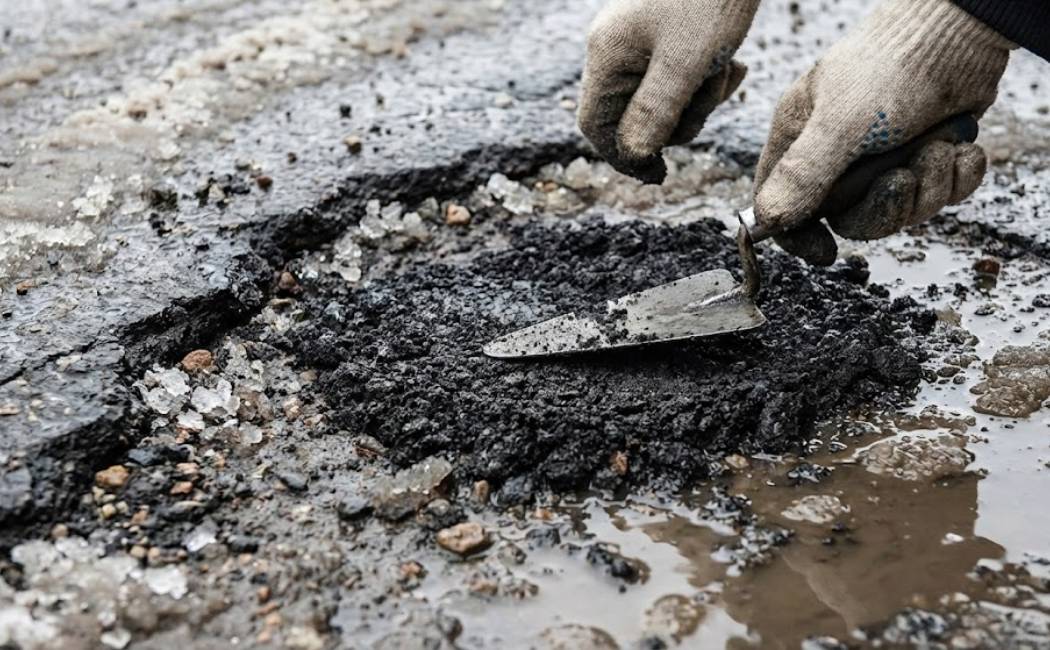
Filling Potholes Using a Cold Patch
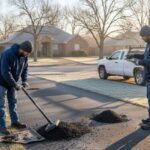
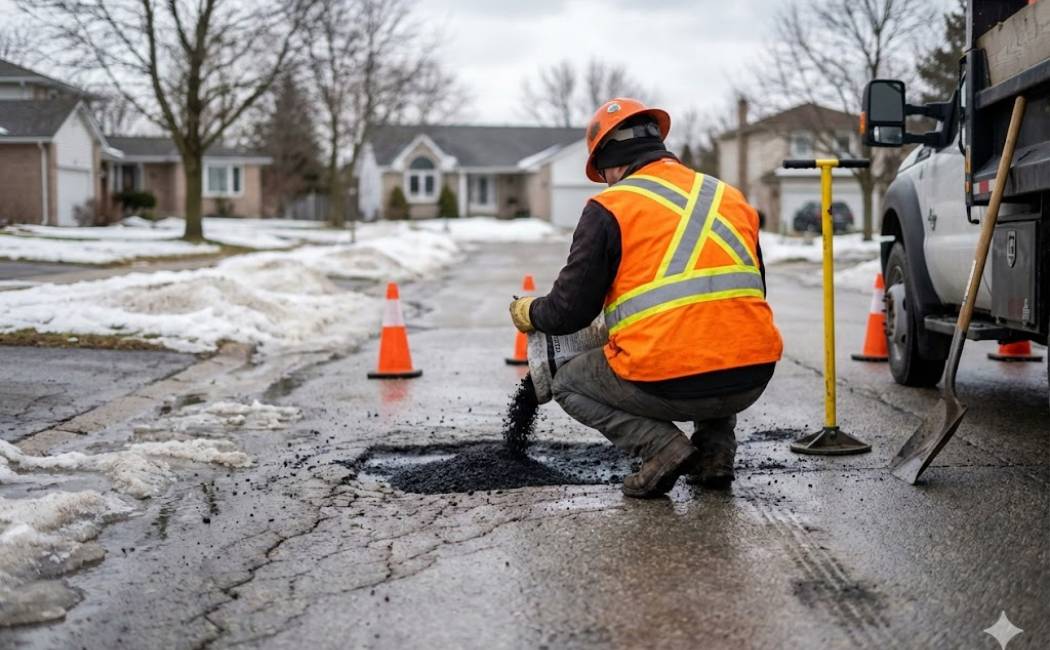
A cold patch is a quick and easy answer for emergency pothole repairs, available in bags from most local hardware shops.
Instructions:
- Removing loose rocks and debris.
- Pouring the cold patch material into the pothole.
- Spread it evenly.
- Compact it using a tamper, or even the tire of your vehicle.
It is merely a temporary fix, but stopping the pothole from deterioration protects your vehicle from additional damage.
Cleaning up damage from the winter months
Cleaning up the area and the surrounding area. Ice, leaves, and dirt buildup will hold moisture against the asphalt. Removing leaves and other blockages from drains will help the water flow out. Cleaning the area helps to dry the moisture.
Using a temporary crack filler
For quick and easy winter repairs, cold-weather filler blocks water from getting inside the crack and helps block the winter freeze/melt cycles. Just ensure the area is clean and dry before applying it.
Some quick winter repair safety tips.
- Always wear gloves and safety glasses.
- Never work on icy repair areas.
- Store tools where kids and pets can’t reach.
- Don’t work close to the street, especially on repair locations that are driveways or parking areas.
Quick winter repairs are helpful to get through the rest of the winter. If the damage continues to happen, it indicates a bigger issue that needs to be repaired.
When You Should Call a Professional
Some problems are too huge—or too volatile—to repair on your own. Call an experienced asphalt contractor in case you see any of those symptoms.
- Deep potholes keep coming back → The bottom is damaged and can only be fixed properly by a professional.
- Alligator cracking is spreading → The asphalt is weakened and needs professional repair.
- The asphalt feels soft, bouncy, or uneven → The further down it is, the more it indicates that the foundation is failing and needs expert investigation.
- A commercial parking lot becomes unsafe → There’s a safety danger, so professional repair is needed.
Tips to Avoid Damage in the Winter
Taking preventative steps after your asphalt has been fixed will save you a ton of time and money next winter.
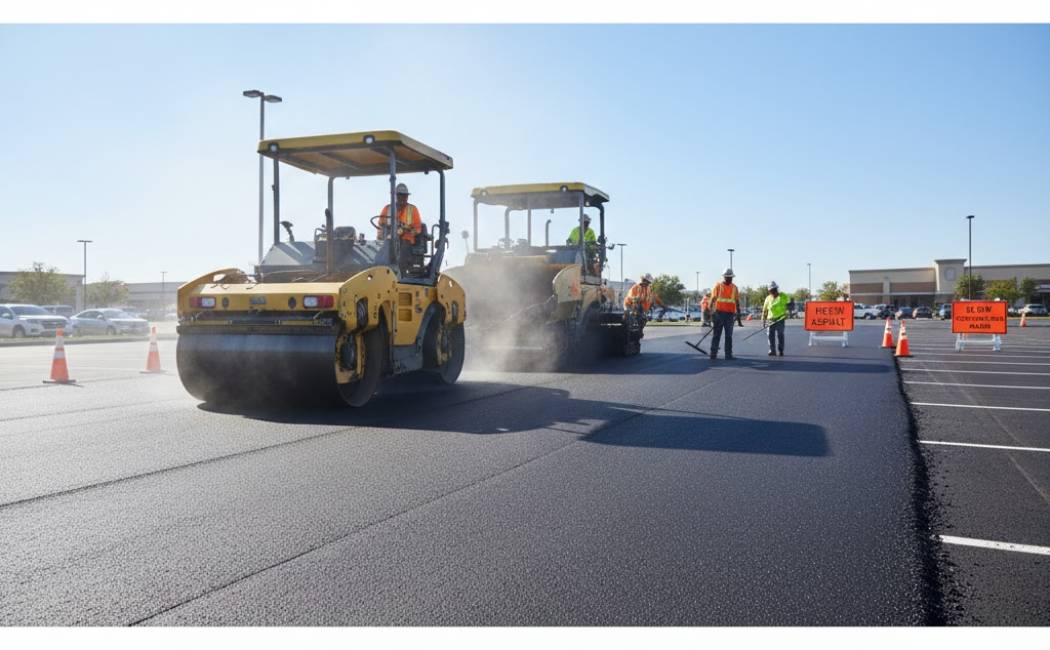
- Seal coating before winter: Seal coating asphalt is done every couple of years and is made to maintain and prolong the life of your asphalt. Most experts recommend seal coating every two to three years. It is criminal how much seal coating can help.
- Improving drainage: Whatever you do, always ensure that water is directed to flow away from your pavement. Good drainage will help reduce the chances of your asphalt getting potholes and cracks. Having a professional come in to alter the slopes and add drains can be a big help.
- Annual inspections: Annual inspections, especially before winter, will help catch issues before they become big. It is especially important to fill in cracks and fix small issues before the cold weather hits, so they do not get worse.
Final Remarks
In winter, bad weather makes asphalt all broken up, but taking quick winter weather repair action can save you from bigger problems and hefty repair costs. Look for early signs like widening cracks, mysteriously new potholes, and bad, still water puddling. It’s best to use quick, temporary homemade winter repairs, but proactively call winter repair professionals to fix damage, such as potholes and resurfacing roads.
In winter asphalt repair, property owners have been working with Best Asphalt Service Texas and have been working with Top Asphalt Company Texas for safe and professional surface restoration for reliability.