 By
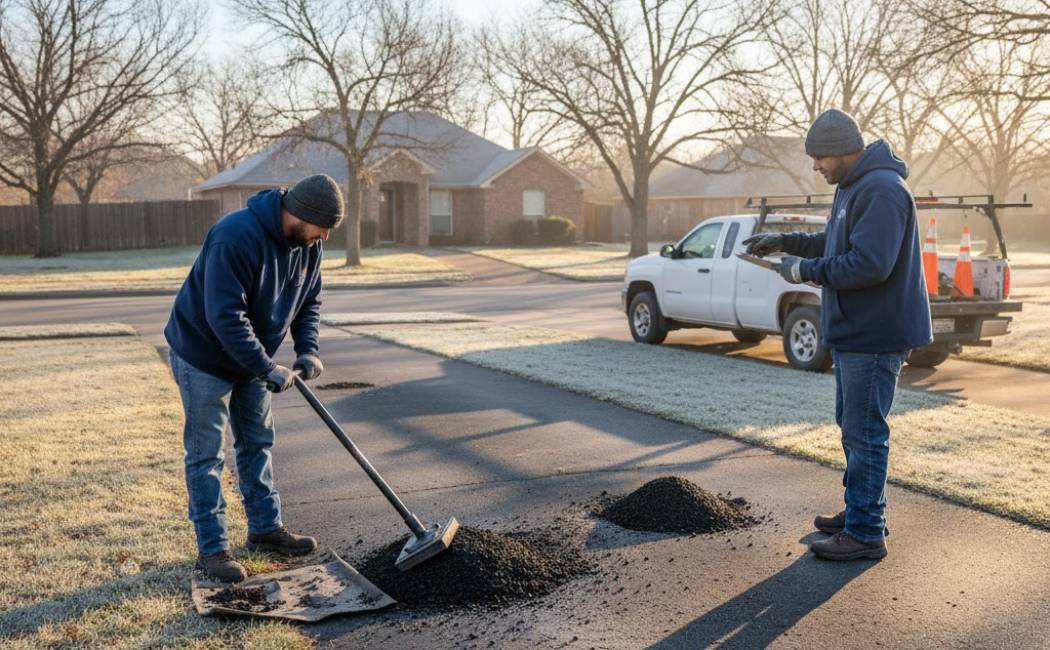
By Winter in North Texas is not as harsh as in other parts of the country, but the weather can still pose specific difficulties, which can affect your asphalt driveway or parking lot. The freeze-thaw cycles, surprise cold fronts, and water-absorbent are all factors that can weaken asphalt, cause cracks, and accelerate the rapid formation of potholes.
In an effort to help homeowners protect their investment, we have gathered the most standard inquiries that come in during this time of winter to help our customers with their asphalt repair planning. From small cracks to large structural damage, this guide will help homeowners make educated choices and select the most suitable repair method for the common conditions.
Is It Possible to Pour Newly Made Asphalt In The Winter?
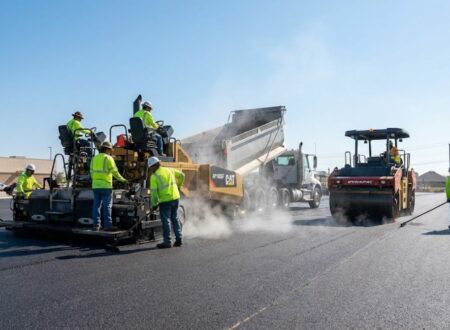
Yes, but only to a certain extent.The pouring of asphalt depends a lot on the temperature outside. For hot asphalt to be poured, the ground and air temperature should be a minimum of around 50°F and even rising, to compact properly. However, if the ground and air outside are not consistently 50°F or rising, then asphalt cannot be compacted properly, and it will cool down too quickly, leading to a weak bond in the asphalt and previous failure.
Winter Temperature Concerns
- Asphalt loses a lot of heat rapidly in the cold air.
- If the asphalt is not compacted enough, the chance of surface travelling increases.
- Snow or moisture on the base layer prevents proper adhesion of the asphalt.
With these challenges being in play, most asphalt paving contractors try to avoid asphalt paving during the winter, especially if the temperature is not warm enough.
Alternatives if Putting Off The Paving is Not an Option
- Winter blend asphalt to be used for temporary repairing
- Filling cracks to stop water intrusion
- Infrared repairs are used to stabilize damaged areas
These methods will help keep the driveway in a working condition until the proper paving conditions of spring return.
Professional Tip: Always consult a professional like Professional Asphalt Services Texas before you decide on winter paving.
Is Cold Patch a Permanent Or Temporary Fix?
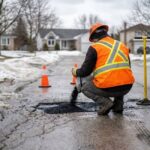
One of the most popular products for repairs in the winter months, but it’s the most temporary of repairs.
When Cold Patch Works
Cold Patch works great in the winter for contractors; it’s great for:
- Emergency pothole fill
- Hazard repairs
- Preventing loss of asphalt
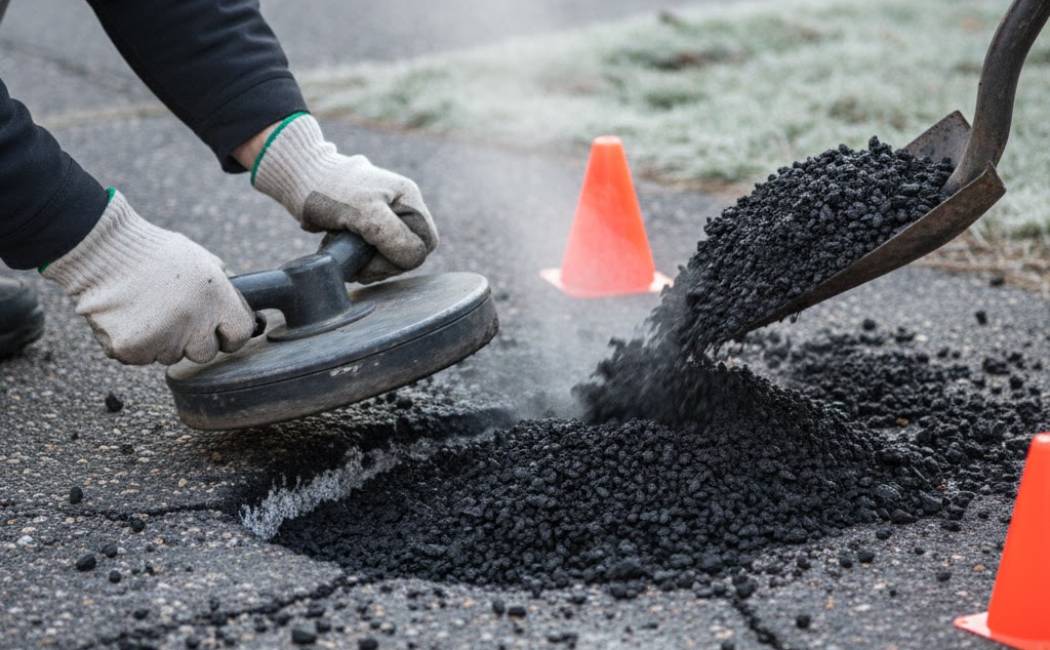
Cold Patch works in all weather and is the most popular in the winter for repairs.
What Are the Limitations of a Cold Patch?
Cold Patch, like any product, comes with its own list of limitations. For Cold Patch, those limitations include:
- Not sticking to the asphalt as well as hot asphalt.
- It is loose and will need to be redone in the spring/summer.
- It is a permanent repair in hot weather.
A more permanent repair in the summer months with hot-mixed asphalt or a complete repair is usually required.
Will Sealcoat Work in Winter Conditions?
Winter is not ideal for sealcoating, although sealcoating is necessary for protecting asphalt from moisture, UV rays, and oxidation.
Seasonal Limitations
Sealcoat needs:
- Surrounding temperature of at least about 50°F
- Dry weather for a minimum of 24 hours
- No possibility of freezing overnight
Unfortunately, in the winter, North Texas gets colder and more sudden temperature drops, leading to the inability to properly sealcoat.
Best Timing for Sealcoating
To achieve the best long-term protection from sealcoating, have it done in:
- Late spring
- Summer
- Early fall
These times have stable, warm temperatures to allow the sealcoat to cure.
Why Sealcoat Matters
Looking ahead, your asphalt is protected from oxidation, and the overall lifespan of the pavement is increased. Also, the costs of repairs are lowered. Even if sealcoating needs to be done over winter, planning ahead will make a difference.
How Can I Avoid Potholes and Cracks This Winter?
Damage to asphalt can be reduced, especially if hindrance measures are taken in advance.
Expert Tips for Winter Asphalt Protection
- Ensure Proper Drainage: Standing water is always an enemy of asphalt, particularly during freeze-thaw cycles.
- Fill Cracks Before Freezing Temperatures Hit: Fillable cracks block water intrusion, which prevents potential damage from potholes.
- Schedule Regular Inspections: Small issues can get worse during the winter months. Avoid issues by assessing the damage regularly.
- Remove Debris and Snow Promptly: Keeping the surface clean prevents water from pooling in the different vulnerable areas.
These are some aspects of preventive maintenance that can save people thousands of dollars in potential repair costs and damage.
When Should I Call a Professional Instead of DIY?
Some homeowners prefer DIY, but some circumstances need a professional touch.
Signs the Damage Is Too Severe for DIY:
- Large or spreading potholes
- Structural cracks (alligator cracking)
- Base layer sinking or softening
- Water consistently pools
- Asphalt buckling or heaving
Trying to DIY fix serious damage can result in:
- Safety issues
- Worsened underlying damage
- More expensive repairs in the future
Bottom line: If your asphalt shows moderate to significant degradation, it’s a good idea to get a professional to assess the problem. There are good reasons to choose a professional asphalt service for your needs.
Final Remarks
In North Texas, winter asphalt repairs require the right timing, the correct materials, and specialised ability. Without the right guidance, minor issues like cracks, potholes, and drainage problems can quickly become major problems that are expensive to fix.
Asphalt damage can become a major problem, and you do not want to wait until spring to find that out. Protect your property from all winter damage by getting a free inspection or quote today.
North Texas homeowners rely on Trusted Texas Asphalt for dependable, long-lasting, and professional repairs needed in the winter.