 By
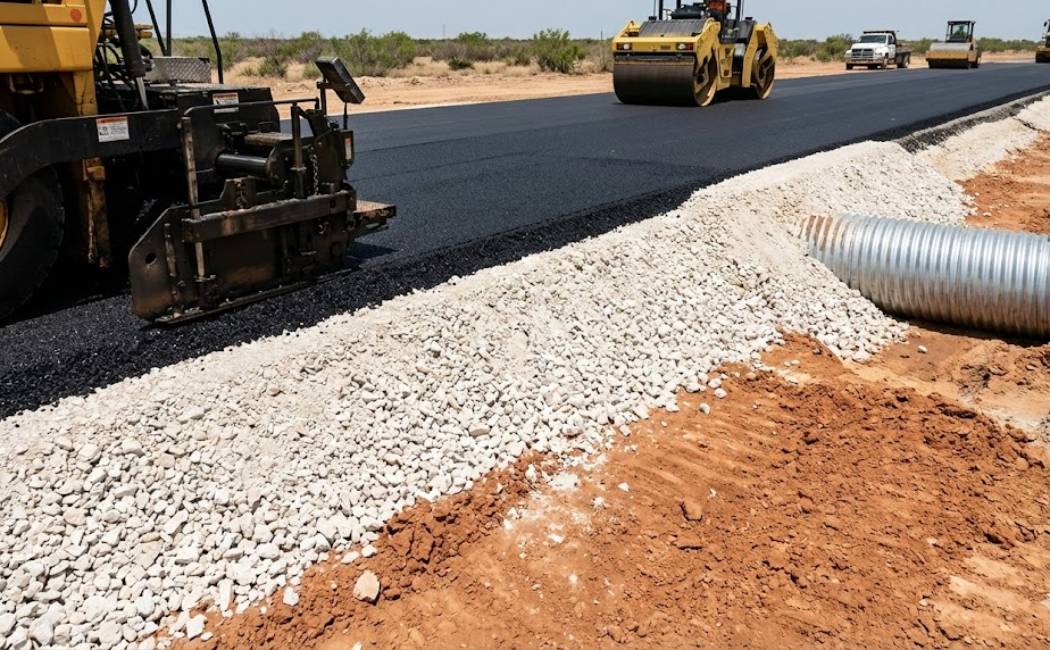
By In Texas, the performance of asphalt pavements depends on much more than the surface layer only. Many failures of pavement systems start below the surface layer, where the soil condition, base material layer strength, drainage systems structure and condition also play an important role. Texas is described by extreme heat, a diverse range of soil types, heavy rainfall, and occasional unfreezing events. Considering these factors, a proper pavement foundation design is required for the asphalt pavement to last.
Assuming the conditions under the asphalt surface will be without proper design and construction will lead to early surface cracking, rutting of the pavement surface, and costly surface repairs.
Why Texas Asphalt Fails Faster Without a Proper Foundation?
The challenges of Texas as a pavement location require unique solutions to be implemented on pavements. Intense heat during the summer creates a situation where pavement softening and expansion take place, and when the clay soils are expansive, shifting occurs to a great degree, and moisture changes. Pavement structures are further stressed by heavy storm overflow and flash floods, and in some areas, winter freeze-thaw adds another dimension of risk.
The start of most pavement problems is certainly not on the top surface. Rather, the start of most pavement problems is beneath the surface layer of the asphalt, where soil is unstable, the base material layer is weak, drainage is poor, and movement or moisture interference is occurring. Once the structural foundation is allowed to fail, the asphalt surface will be damaged in a matter of time.
Soil Types in Texas and Implications on Asphaltic Pavement
Texas is known for having the most diverse soil profile across the United States. Each soil type has a unique effect on the performance of the pavement.
Expansive Clay Soils (DFW, Central Texas)
Soils of this type are common in the Dallas-Fort Worth and Central Texas areas. These high plasticity soils can gain and lose moisture, causing swelling and subsequent shrinkage of the soil profile. This moisture content cycling significantly causes the soil profile to constantly move underneath the pavement.
What this causes is:
- Cracking of the pavement’s surface
- Uneven settlement of the pavement
- Sinking and/or heaving of pavement sections
Without good design support, asphalt constructed on top of clay soils is bound to have a premature and failed life cycle.
Sandy Soils (East Texas and Coastal Regions)
Sandy soils are prevalent in East Texas and the Coastal Regions. While they drain water more easily than clay, they do not have a load-bearing capability that can support heavy traffic.
Sandy soils can incur the following issues in traffic load:
- Settlement
- Rutting and depressions in wheel paths
- Reduced pavement life
To ensure stability, additional base material or reinforcement is often required.
Rocky and Caliche Soils (West Texas)
Rocky and caliche soils are the dominant types in West Texas. They provide and sustain natural support and can withstand heavy loads. However, they often have poor drainage.
If water is trapped above or within these layers:
- Base material weakens
- Freeze-thaw cycles can increase cracking
- Pavement collapses
To perform effectively, even strong soils require appropriate drainage design.
The Importance of the Sub-Base
The surface layer of the pavement system will always be the asphalt layer; however, the sub-base will always be the true foundation of the pavement system. The sub-base is the layer that supports the rest of the pavement system. If designed correctly, the sub-base will be able to dissipate the loads, control the movement of the soil, and insulate the asphalt layer above the sub-base.
Functions of the Sub-Base in High Traffic Areas
The sub-base holds the same importance in all sections of the pavement system; however, in high-traffic areas like parking lots, highways, and industrial sites, the sub-base is required to withstand high, repetitive load-rest cycles.
When properly compacted, a sub-base will:
- Provide support to the slab
- Resist bending
- Alleviate pressure on the upper asphalt layer
In Texas, the use of crushed stone aggregates is a common practice to enhance the performance of the pavement system.
The Consequences of a Weak Sub-Base
If the sub-base layer is of low quality or if it is not designed to withstand the loads, the sub-base will fail and lead to pavement distress.
If the sub-base is weak, it will lead to the following:
- Alligator (fatigue) cracks
- Rutting in tire tracks
- Surface waves and uneven surface
These issues will appear before the expected lifespan of the asphalt layer, and this is the case even if the asphalt is of high quality.
Drainage Systems That Protect Texas Pavement
In Texas, one of the most crucial design aspects of asphalt pavement is drainage because water is the major factor in softening the sub-base layers and triggering pavement failure.
Surface Drainage
Surface drainage is the ability of the pavement to be designed with proper cross slopes so that rain and flood runoff flows away from the pavement.
Effective surface drainage:
- Eliminates standing water
- Lessens surface erosion
- Increases the safety and longevity of the pavement
Even minor surface grading errors can lead to water ponding and infiltration of the pavement structure.
Sub-Surface Drainage
In regions with poor natural drainage or high groundwater levels, surface drainage alone is insufficient.
Sub-surface drainage methods include:
- Edge drains
- French drains are located under the pavement
These systems extract water from the sub-base to avoid saturation and weakening of the base.
Effects of Standing Water on Asphalt
Weak pavements with standing water problems can deteriorate from within. Water that gets into the sub-base:
- Diminishes load-bearing capacity
- Creates potholes through repeated freeze and thaw cycles
- Accelerates the deterioration of the asphalt after storms
That is the primary reason potholes become common after heavy rainfall events in Texas.
Soil Stabilisation Options for Texas Projects
Soil stabilisation is critical for Texas pavement projects, especially for regions that have poor soil conditions.
Some methods for stabilisation include:
- Using lime for the stabilisation of expanding clay soils
- Include crushed whole base layers for added strength
- Geotextile reinforcement for soil and base materials separation
When is Stabilisation Required vs Optional
Some circumstances that may require stabilisation include:
- Heavy, high-traffic pavements
- Soils that are clay-heavy or weak
- Areas that may flood
For light-use, lower-duty pavements, stabilisation is typically optional. However, it is still recommended in order to extend the pavement durability and lower maintenance costs on the pavement over time.
Engineering Considerations for Texas Weather
To successfully design pavement for Texas, consider:
- Extreme heat and thermal expansion
- Heavy rain and flooding
- Freeze-thaw cycles in colder areas
Smart engineering practices take these conditions into account from the outset. Also, timing the construction and repairs for perfect weather improves compaction, curing, and overall pavement performance.
Final Remarks
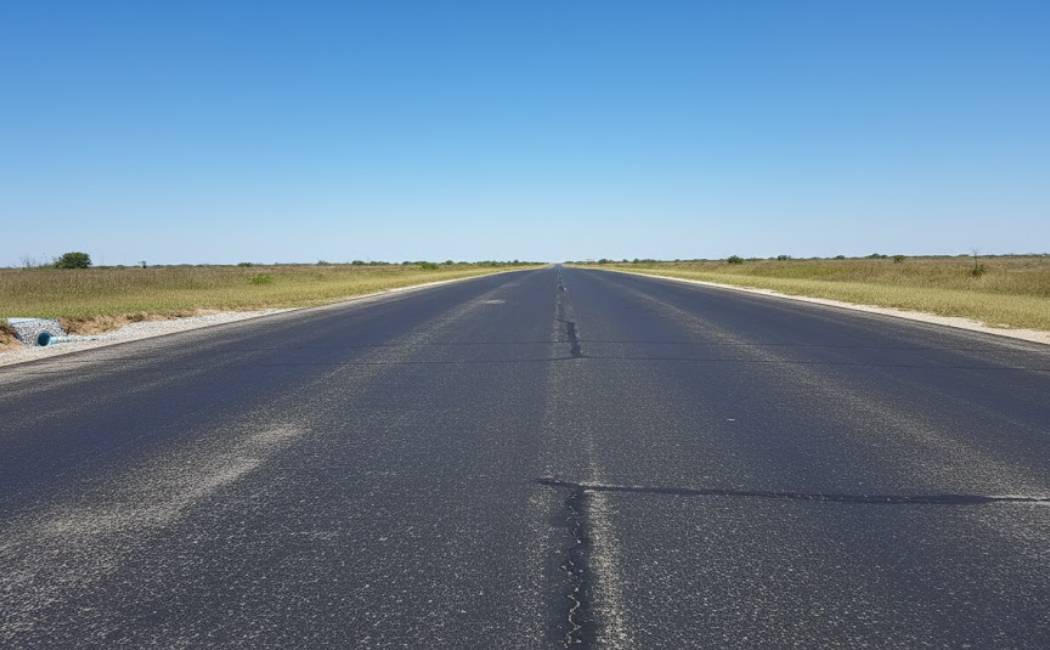
To ensure long-lasting asphalt pavement in Texas, other factors in addition to the quality of materials need to be considered. Perfect preparation of the soil, the design of an effective sub-base, and the inclusion of quality drainage systems all contribute to the overall performance and longevity of the pavement.
In order to reduce the risk of suffering high repair costs and to prevent premature pavement failure, an investment in the design and engineering, in addition to the construction of the pavement, is essential. If the pavement sub-base is designed and constructed properly, the asphalt surface will be able to withstand the harsh Texas weather conditions for many years. Contact us today, Texas Asphalt to ensure your Texas pavement is built on a strong foundation that lasts for years.